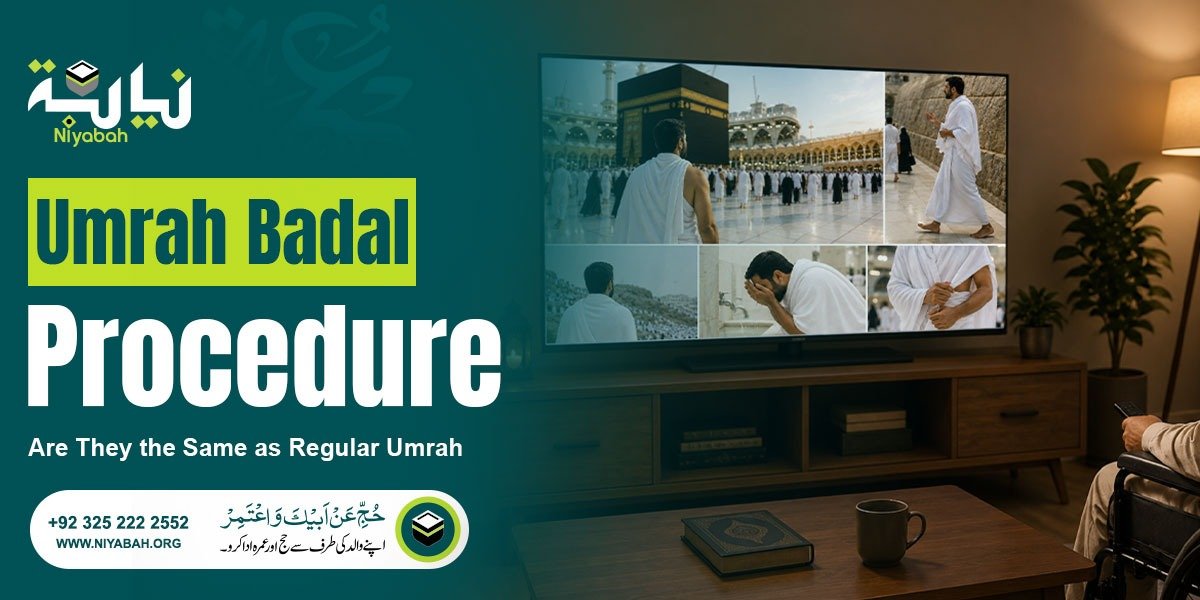
When a person considers arranging Umrah for a parent, relative, or loved one, a common question is whether the process differs from performing Umrah personally. The essential Umrah Badal procedures follow the same overall sequence as regular Umrah. The performer enters Ihram, completes Tawaf around the Kaaba, performs Sa’i between Safa and Marwah, and concludes with Halq or Qasr. The worship is not shortened or replaced by a symbolic act. Families considering this form of Niyabah can arrange Umrah Badal for a loved one through a structured process.
The main difference is the intention and the person for whom the worship is performed. In regular Umrah, the pilgrim intends the worship for themselves. In Umrah Badal, the performer completes the same sacred journey on behalf of another eligible person and therefore carries the responsibility of acting as a representative.
Are Umrah Badal Procedures the Same?
Yes. The essential acts are generally performed in the same way as regular Umrah: entering Ihram, making the relevant intention, completing seven circuits of Tawaf, performing Sa’i between Safa and Marwah, and shaving or trimming the hair. The difference is that the intention is for a specified person rather than the performer. No required stage is omitted merely because the worship is being performed on behalf of someone else.
The basic procedure sequence should be separated from detailed questions of eligibility. Scholars may discuss particular conditions differently, especially regarding a living person, permanent inability, or the representative’s qualifications. For a personal case, seek guidance from a qualified scholar. Once the conditions are understood, families may review the Umrah Badal service to see how a request is handled.
What Are the Main Umrah Badal Procedures?
The journey begins with a clear intention for the named person and entry into Ihram from the appropriate point. The performer observes the requirements of Ihram and recites the Talbiyah. After reaching Masjid al-Haram, the performer completes Tawaf around the Kaaba, followed by Sa’i between Safa and Marwah. The Umrah concludes with Halq or Qasr, meaning shaving or shortening the hair according to the applicable guidance.
In simple sequence, the process includes:
- Making a clear intention on behalf of the specified person
- Entering Ihram from the appropriate Miqat
- Reciting the Talbiyah and observing Ihram
- Performing seven circuits of Tawaf
- Completing Sa’i between Safa and Marwah
- Performing Halq or Qasr to conclude the Umrah
Each stage forms part of one complete act of worship. When comparing arrangements, ask how the full process is completed and how the represented person is identified. You can also learn more about Niyabah and its approach to handling individual requests.
Regular Umrah vs Umrah Badal: A Complete Comparison
The clearest way to compare the two is to separate the purpose from the method. In regular Umrah, the pilgrim performs each rite for themselves. In Umrah Badal, another person performs the same rites on behalf of a specified individual. The places, sequence, and sacred state remain connected to the established form of Umrah; the representative intention is what changes.
A practical comparison looks like this:
- Person represented: Regular Umrah is for the performer; Umrah Badal is for another specified person.
- Niyyah: Made for oneself in regular Umrah and for the represented person in Umrah Badal.
- Ihram: Required in both forms.
- Tawaf: Seven circuits are performed in both forms.
- Sa’i: Completed between Safa and Marwah in both forms.
- Halq or Qasr: Completed at the end in both forms.
- Sequence: The normal order of Umrah is followed in both forms.
- Responsibility: Umrah Badal carries the added trust of representing another person.
Umrah Badal is therefore not simply a Tawaf, a dua, or a dedication made after personal Umrah. It is a distinct Umrah with a clear representative intention. Before proceeding, ask what is included and how the process is handled. When ready, families can request a complete Umrah Badal arrangement for the person they wish to name.
The Main Difference Is the Niyyah
Niyyah is the central point that distinguishes personal Umrah from Umrah Badal. Before beginning, the performer knows that the Umrah is being undertaken on behalf of a particular individual. The person represented should be clearly identified so the intention is not vague, uncertain, or casually changed during the process.
The intention is fundamentally a conscious purpose in the heart, although a person may also express it verbally. What matters is that the performer genuinely intends the worship for the specified person. Questions about exact wording and detailed legal conditions may vary according to scholarly interpretation, so consult a trusted scholar when a personal ruling is needed. If the case is suitable, you may submit an Umrah Badal request with the correct details.
Is Ihram the Same in Umrah Badal?
Ihram remains an essential part of the journey. The performer enters the sacred state from the appropriate Miqat and observes the relevant restrictions and etiquettes. Umrah Badal does not create a separate type of Ihram or remove its responsibilities. The performer physically enters Ihram while intending the Umrah for the person being represented.
Some people mistakenly assume that representation changes the physical requirements of pilgrimage. It does not. The performer prepares, recites the Talbiyah, and continues toward Makkah in the normal manner. Anyone arranging the service should ask whether the performer understands the complete process and choose an arrangement that treats the worship seriously rather than as a routine transaction.
Is Tawaf Performed Differently During Umrah Badal?
Tawaf is performed around the Kaaba in the same established manner. The performer completes seven circuits and follows the relevant guidance associated with Tawaf. Performing Umrah for another person does not reduce the number of circuits or turn Tawaf into a symbolic gesture. It remains a central part of the complete journey.
During Tawaf, the performer may engage in remembrance and supplication while remaining mindful of the person represented. There is no need to invent a visible difference in every movement or every dua; the distinction has already been established through the intention. Families should focus on whether the full Umrah is completed properly and ask clear questions before proceeding.
Is Sa’i the Same During Umrah Badal?
Sa’i is completed in the normal way between Safa and Marwah. The performer begins at Safa, follows the prescribed sequence, and completes the required journeys until the rite ends at Marwah. Performing Umrah for another person does not shorten Sa’i or remove it from the process. The representative completes the physical act while maintaining the intention for the named individual.
This part of Umrah reflects effort, patience, and reliance upon Allah. In Umrah Badal, that effort is undertaken by the representative as part of fulfilling an entrusted act. If you are arranging Umrah for someone who could not make the journey, choose a service that explains each stage. You can explore the Niyabah platform for more information.
Does Umrah Badal End with Halq or Qasr?
Yes. After Tawaf and Sa’i, the performer concludes the Umrah through Halq or Qasr according to the applicable guidance. For men, this involves shaving or shortening the hair, while women trim a small amount from the ends. This stage marks the completion of Umrah and the end of the state of Ihram.
Because it comes at the conclusion, Halq or Qasr should not be dismissed as a minor detail. A complete Umrah is not limited to Ihram, Tawaf, and Sa’i while ignoring the final requirement. The same principle applies when the worship is performed by representation.
What Changes in Umrah Badal If the Procedures Are the Same?
Although the physical sequence remains the same, several important matters change. The worship is undertaken in a representative capacity, which affects the intention, the identity of the person represented, the eligibility of the case, and the responsibility carried by the performer. These differences may not be visible in the movements, but they are central to the purpose of Umrah Badal.
The performer is also carrying an amanah, or trust. A family may be arranging the Umrah because a parent passed away or became permanently unable to travel. That religious and emotional importance deserves respectful handling. Review the relevant conditions, seek scholarly guidance where needed, and choose a process that provides clarity rather than uncertainty.
The Niyyah Is for Another Person
In personal Umrah, the pilgrim intends the worship for themselves. In Umrah Badal, the intention is directed toward another named person. This establishes the representative nature of the act. The performer should know exactly who is being represented before beginning and should not leave the identity unclear.
A clear intention protects the seriousness of the worship. Families should provide accurate details and avoid confusion over names. When submitting a request, double-check the information before it is assigned to the performer.
The Recipient Must Meet the Relevant Conditions
The fact that the procedures are the same does not mean Umrah Badal applies automatically in every situation. Questions about who may be represented belong to the Islamic ruling rather than the physical sequence. It is commonly discussed in relation to a deceased person or someone with genuine and lasting inability, but individual circumstances may require careful scholarly assessment.
Temporary difficulty, financial limits, travel inconvenience, or short-term illness should not simply be assumed to carry the same ruling as permanent inability. Avoid drawing a personal ruling from a general article. Consult a qualified scholar, especially when the person is living and the reason for delegation is uncertain.
The Performer Carries an Additional Amanah
The performer is not only completing an act of worship; they are carrying the trust of another person or family. That requires knowledge of the rites, physical ability, sincerity, and responsible conduct. The task should not be rushed or treated as a box to check because someone has entrusted the performer with a meaningful religious intention.
Transparency therefore matters when Umrah Badal is arranged through a service. The family should understand how the request is submitted, how the person is identified, who performs the Umrah, and what confirmation is provided. Choose a process that offers reasonable clarity while preserving the dignity of the worship.
The Umrah Is Dedicated to One Specific Person
For clarity of intention, an Umrah Badal is generally arranged for one specified individual. The representative begins knowing exactly who is being represented. This keeps the Niyyah focused and avoids uncertainty about assigning one act collectively to several people.
If a family wishes to arrange Umrah for more than one loved one, separate arrangements allow each person to be named individually. Questions about exceptional cases or differing views should be referred to a qualified scholar. Individual requests also support clearer records and communication.
Does the Performer Need to Complete Every Procedure?
Yes. The performer should complete the full Umrah rather than selecting only one or two acts. Intention alone is not the complete Umrah, nor are Tawaf or Sa’i by themselves. The rites belong together within the established sequence, and the representative is responsible for carrying the worship through to its conclusion.
When comparing providers, ask whether the performer will enter Ihram with the correct intention, complete Tawaf and Sa’i, and perform Halq or Qasr. Clear answers prevent misunderstanding. If you prefer an organized process, view Niyabah’s Umrah Badal service and review how requests are managed.
Are the Duas Different in Umrah Badal?
The main distinction is the Niyyah, not an entirely separate set of supplications. The performer may make dua for the person represented and remember them during the journey, but every supplication does not need special wording. Remembrance and dua remain part of the wider procedure experience of Umrah.
Be careful about presenting a particular sentence as the only valid formula without reliable scholarly evidence. A clear intention should not be confused with pressure to memorize an invented script. When in doubt, follow trusted religious guidance and keep the purpose of the worship clear and uncomplicated.
Common Misunderstandings About Umrah Badal Procedures
Because many people first hear about Umrah Badal through short videos or advertisements, important details can be oversimplified. A common misconception is that it is a smaller version of Umrah. In reality, the representative performs a complete Umrah; what changes is the person for whom it is intended. Another mistake is assuming that a personal Umrah can simply be reassigned afterward. The representative intention should be clear from the beginning.
Other misunderstandings include:
- Umrah Badal is only a Tawaf performed for someone else.
- Sa’i can be omitted because the represented person is absent.
- Ihram is unnecessary for a representative.
- The represented person does not need to be identified.
- One general intention automatically covers any number of people.
- A video or certificate alone proves every religious requirement was fulfilled.
- Price matters more than knowledge, trust, and process clarity.
Avoid these errors by learning the basic process, asking direct questions, and seeking scholarly advice on eligibility. Do not rush because the topic is emotional. Choose an arrangement that respects both the worship and the person you wish to honor.
Why Correct Performance Matters in Umrah Badal
Umrah is an act of worship, so correct performance matters whether it is undertaken personally or for someone else. The representative should understand the sequence, begin with the right intention, and complete each stage conscientiously. Good intentions should be joined with knowledge, care, and attention to the requirements of the pilgrimage.
Correct performance also matters because the family may not be present in Makkah. They depend on the integrity of the person or organization handling the request. Before proceeding, ask what information is collected, how the performer is assigned, and how completion is communicated. Choose care over haste and clarity over vague promises.
How Niyabah Helps Arrange Umrah Badal
Niyabah provides a structured way to request Umrah on behalf of a parent, relative, or loved one. According to its current process, the requester provides the person’s name and details, a performer in Makkah is assigned, the Umrah is completed with the intention for that person, and confirmation is shared afterward. This gives families a clearer view of the journey from request to completion.
A structured service should support responsibility and respectful communication around a sacred act. It should not reduce Umrah to a commercial transaction or promise guaranteed acceptance and reward, which belong to Allah alone. If your case is appropriate and you are ready to proceed, request Umrah Badal through Niyabah and provide the intended person’s details carefully.
Conclusion:
The essential Umrah Badal procedures follow the same sacred journey as regular Umrah: Ihram, Tawaf, Sa’i, and Halq or Qasr. The defining difference is the Niyyah. The performer acts on behalf of a specified person and carries the added responsibility of completing the worship with knowledge, sincerity, and care. This distinction helps correct the idea that Umrah Badal is a shortened, symbolic, or incomplete version of Umrah.
When the relevant Islamic conditions are met, arranging Umrah for a loved one should be approached with clarity and respect. Seek scholarly advice for personal questions, provide accurate details, and choose a process that explains how the worship will be completed. To take the next step, arrange Umrah Badal through Niyabah and submit the name of the person you wish to represent with care.
Frequently Asked Questions
Are Umrah Badal procedures the same as regular Umrah?
The essential physical sequence is the same. The performer enters Ihram, completes Tawaf, performs Sa’i, and concludes with Halq or Qasr. The main difference is the intention: The Umrah is performed on behalf of a specific person rather than for the performer. Detailed questions about eligibility and conditions should be discussed with a qualified scholar.
What is the main difference between Umrah and Umrah Badal?
The main difference is who the Umrah is intended for. In regular Umrah, the pilgrim performs the worship for themselves. In Umrah Badal, the pilgrim acts as a representative and makes the intention for another eligible person. The location, sequence, and principal rites of Umrah remain the same.
Is Tawaf performed the same way during Umrah Badal?
Yes. The performer completes Tawaf around the Kaaba in the established manner, including seven circuits. It is not shortened because the Umrah is being performed on behalf of another person. The representative intention does not replace or reduce the physical rite.
Does Umrah Badal include Sa’i between Safa and Marwah?
Yes. Sa’i remains part of the complete Umrah process. The performer completes the required journeys between Safa and Marwah while maintaining the intention for the person being represented. Omitting Sa’i would mean leaving out an essential part of the Umrah journey.
Is Ihram required when performing Umrah Badal?
Yes. The performer enters the state of Ihram from the appropriate Miqat and observes the relevant requirements. Umrah Badal does not have a separate shortcut that removes Ihram. The performer physically enters Ihram while intending the Umrah on behalf of the named person.
Does the performer make a different Niyyah for Umrah Badal?
The intention differs in its direction. Instead of intending the Umrah for themselves, the performer intends it on behalf of another specific person. The person should be clearly identified. Questions about exact wording or a particular legal situation should be referred to a trusted scholar.
Can one Umrah Badal be performed for multiple people?
For clarity of representative intention, Umrah Badal is generally arranged for one specified person. If a family wishes to arrange Umrah for several loved ones, separate Umrahs allow each individual to be named clearly. Consult a qualified scholar if you have a specific case or have heard a different view.
Is Umrah Badal complete without Halq or Qasr?
Halq or Qasr is the concluding stage after Tawaf and Sa’i. The performer should complete the relevant hair shaving or trimming requirement rather than ending the process early. This final act marks the completion of the Umrah and the exit from the state of Ihram.ly. This final act marks the completion of the Umrah and the exit from the state of Ihram.