When someone we love passes away or becomes permanently unable to travel, we naturally search for a meaningful way to honor them. Some families choose to give Sadaqah on their behalf, while others consider arranging Umrah Badal. Both choices can arise from sincere love, but they are not identical acts. Understanding Sadaqah vs Umrah Badal can help you make a decision based on your intention, the person’s circumstances, and the purpose you want to fulfil. To understand how proxy Umrah is arranged, review the Umrah Badal service for loved ones.
The answer is not simply that one option is always better than the other. Sadaqah is a voluntary charity that can provide immediate or ongoing benefit to people in need. Umrah Badal is a specific act of worship performed on behalf of an eligible person. Before choosing, it is important to ask what you are trying to accomplish: do you want to provide charitable assistance, fulfil a loved one’s desire for Umrah, or do both? Visit Niyabah to learn how Umrah can be arranged respectfully for an eligible loved one.
What Is Sadaqah?
Sadaqah is a voluntary charity given with a sincere intention to please Allah and benefit others. It can be offered in many forms, including money, food, clothing, water, education, medical assistance, or support for someone facing hardship. Unlike obligatory Zakat, voluntary Sadaqah is flexible. A person may give according to their means, at a suitable time, and through a cause they genuinely trust.
Sadaqah is not limited to large financial contributions. Feeding one person, supporting a struggling family, helping someone pay for treatment, or contributing to a useful community project may all fall within charitable giving. The intention behind the action is important, but the charity should also be delivered responsibly. Before donating, identify a transparent cause and take the first step by giving an amount you can comfortably afford.
Examples of Sadaqah on Behalf of Someone
Families often give Sadaqah while intending that its reward be for a deceased parent, spouse, sibling, relative, or friend. A well-known narration reports that the Prophet Muhammad ﷺ confirmed that charity could be given on behalf of a deceased mother. This provides a basis for families who wish to remember a loved one through an act that benefits others.
Examples may include providing meals, supporting access to clean water, helping with medical expenses, assisting a student, contributing to shelter, or supporting a sustainable charitable project. The best choice may depend on the needs around you and the resources available. Select a cause that is transparent, useful, and consistent with your intention, then make your contribution without delaying a good action unnecessarily.
Sadaqah for Deceased Parents and Loved Ones
The death of a parent often leaves a person searching for something positive they can continue doing in their memory. Giving charity on behalf of a deceased parent can turn grief into a beneficial act. It may help another family while allowing the donor to remember their loved one through generosity, compassion, and service.
Some people prefer a one-time donation, while others choose an ongoing charitable project. Both can be meaningful, but they serve different practical needs. A one-time food donation may address immediate hunger, while a continuing project may provide longer-term benefit. Discuss the options with your family, choose a trustworthy cause, and make the intention clearly before giving.
What Is Umrah Badal?
Umrah Badal refers to Umrah performed by one person on behalf of another eligible Muslim. It is commonly considered when the represented person has passed away or is permanently unable to travel because of old age or a lasting physical condition. The performer completes the rituals of Umrah while making the intention for the specific person being represented.
A narration records that a man told the Prophet Muhammad ﷺ that his elderly father could not perform Hajj, Umrah, or undertake the journey. He was instructed to perform Hajj and Umrah on his father’s behalf. This narration is frequently referenced when discussing proxy pilgrimage for someone who is genuinely unable to travel. Learn more about the arrangement through Niyabah’s trusted Umrah Badal service.
Who May Be Eligible for Umrah Badal?
Umrah Badal is generally associated with a Muslim who has died or a living Muslim who is permanently incapable of undertaking the journey. Permanent incapacity is important because temporary illness, a busy schedule, financial inconvenience, or ordinary travel difficulty may not create the same circumstances. Personal cases should be discussed with a qualified Islamic scholar.
The person performing the Umrah must also understand the rituals and make a clear intention for the named individual. Some scholars also specify conditions regarding whether the performer must first have completed their own pilgrimage. Because individual circumstances can differ, families should avoid relying only on social media clips or informal opinions. Ask a qualified scholar about eligibility before paying for any service.
Sadaqah vs Umrah Badal: What Is the Difference?
The central difference is purpose. Sadaqah is charitable giving intended to benefit people or support a worthwhile cause. Umrah Badal is an actual Umrah performed with the intention of representing a particular eligible person. One focuses on charitable assistance, while the other fulfils a specific act of worship through an appointed performer.
This means Sadaqah and Umrah Badal should not automatically be treated as interchangeable. Donating money to a food project does not mean an Umrah has been performed, and arranging Umrah Badal is not the same as making a charitable donation. Compare your intention carefully, discuss the circumstances with your family, and choose the act that directly corresponds with what you hope to accomplish.
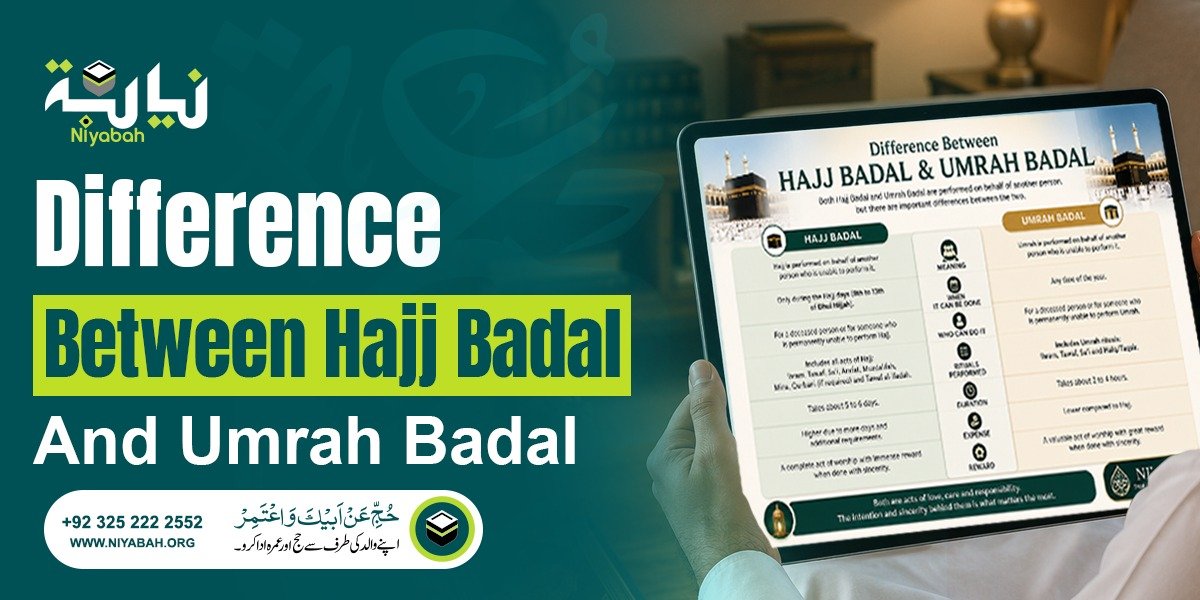
| Point of Comparison | Sadaqah | Umrah Badal |
| Nature | Voluntary charitable act | Proxy performance of Umrah |
| Main purpose | To help people or support a beneficial cause | To perform Umrah for a specific eligible person |
| Beneficiary | A person, family, group, or community | One specifically named individual |
| Financial flexibility | Can be given in almost any amount | Usually includes the cost of arranging the service |
| Location | Can be given locally or internationally | Umrah rituals are performed in Makkah |
| Intention | Charity given for Allah and potentially on behalf of someone | Umrah performed with niyyah for the represented person |
| Process | Depends on the chosen cause | Includes Ihram, Tawaf, Sa’i, and completion of Umrah |
| Can it replace the other? | Not automatically | Not automatically |
Is Sadaqah Better Than Umrah Badal?
It would be inaccurate to say that Sadaqah is always better or that Umrah Badal is always better. Their purposes are different. If your intention is to feed a struggling family, provide water, support treatment, or address an urgent need, Sadaqah directly serves that objective. If your intention is specifically to arrange Umrah for a deceased or permanently incapable loved one, Umrah Badal is the relevant act.
The decision therefore depends on intention, eligibility, affordability, and personal circumstances. It should not be based on emotional pressure or promises of guaranteed reward. No service provider should claim to guarantee divine acceptance. Compare the two options calmly and choose the one that most honestly reflects your intention and the needs you want to address.
Can Sadaqah Replace Umrah Badal?
Sadaqah cannot automatically be described as a replacement for Umrah Badal because the acts are fundamentally different. Giving charity may benefit people in need and may be intended on behalf of a deceased person, but it does not mean that the rituals of Umrah have been performed for that individual.
Similarly, arranging Umrah Badal does not replace the social benefit created by feeding a family, supporting medical treatment, or funding clean water. Families should avoid presenting the decision as a competition between two good actions. Instead, identify the original intention. If the intention was specifically related to Umrah, review the requirements for arranging Umrah on behalf of a loved one before making your decision.
When Should You Consider Donating Sadaqah?
Sadaqah may be suitable when you want to meet an immediate human need. A family facing hunger, a patient requiring medical assistance, a student lacking educational resources, or a community without clean water may benefit directly from charitable support. Sadaqah also offers flexibility for people who want to give according to a limited budget.
It may also be the more practical option when eligibility for Umrah Badal is uncertain or when the family has not yet received reliable religious guidance. Instead of making a rushed decision, you can give charity while continuing to learn about the other option. Choose a verified cause, confirm how the money will be used, and donate with a clear intention.
When Should You Consider Arranging Umrah Badal?
You may consider Umrah Badal when a Muslim loved one has passed away or is permanently unable to travel, and your specific intention is to have Umrah performed on that person’s behalf. This may be especially meaningful when a parent or relative hoped to visit Makkah but could not complete the journey during their lifetime.
Niyabah explains that its service assigns a performer in Makkah, makes the intention for the named individual, completes the Umrah rituals, and provides private confirmation after completion. The website also states that personal information and confirmations are handled privately. Review the Umrah Badal booking process and request clarification before proceeding.
What If Your Loved One Had Planned to Perform Umrah?
Sometimes a parent saves for years, talks repeatedly about visiting Makkah, or intends to travel when their health improves. Life may change before that plan becomes possible. For the family, remembering that unfinished intention can be emotional. Umrah Badal may be considered as a way of arranging the actual pilgrimage on behalf of the person, subject to religious eligibility.
However, emotion should be accompanied by care and verification. Confirm the circumstances, understand the service, and make sure the performer will undertake a complete Umrah for the named individual. Do not rely on vague statements that an unnamed person will “pray in Makkah.” Request a clear explanation of the rituals, intention, completion process, and confirmation.
Can You Arrange Umrah Badal and Give Sadaqah Together?
A family does not necessarily have to choose only one option. Because the two acts serve separate purposes, a person may give Sadaqah and also arrange Umrah Badal when financially able and religiously appropriate. One act can help people in need, while the other arranges Umrah for a specific loved one.
For example, siblings may jointly give food to vulnerable families in memory of a parent and separately arrange Umrah Badal for that parent. The actions should remain distinct, with a clear intention for each. Create a realistic family budget, priorities essential obligations, and then decide whether one or both actions can be completed responsibly.
What Should You Do If Your Budget Is Limited?
A limited budget does not make a sincere action meaningless. Sadaqah can be given in a small amount, and the donor may choose an immediate need that fits their means. Financial pressure should never push a family into debt or cause them to neglect essential household responsibilities.
If you specifically want to arrange Umrah Badal, ask the provider for a complete and transparent cost before committing. Find out what the amount covers and whether there are any additional charges. Avoid making a decision based only on the lowest price because reliability, correct performance, communication, and transparency are also important. Request full service details first, then decide without unnecessary pressure.
How to Choose a Reliable Umrah Badal Service?
A reliable service should explain who performs the Umrah, where it will be performed, how the intention is made, what rituals are completed, and what confirmation is provided. The service should not use guaranteed spiritual outcomes as a marketing promise. It should communicate respectfully and allow families to ask questions before booking.
Privacy is equally important because the request may include the name of a deceased or seriously ill person. Niyabah states that requests are handled individually, Umrah is performed in Makkah with the relevant intention, and private confirmation is shared after completion. Explore Niyabah’s Umrah Badal arrangements and verify every important detail before placing a request.
Trust and Transparency in Umrah Badal
Trust cannot be created through emotional wording alone. A service provider should be able to describe its process in simple terms. Families should understand how they submit the person’s name, how the performer is assigned, when the Umrah will be undertaken, and how completion will be communicated.
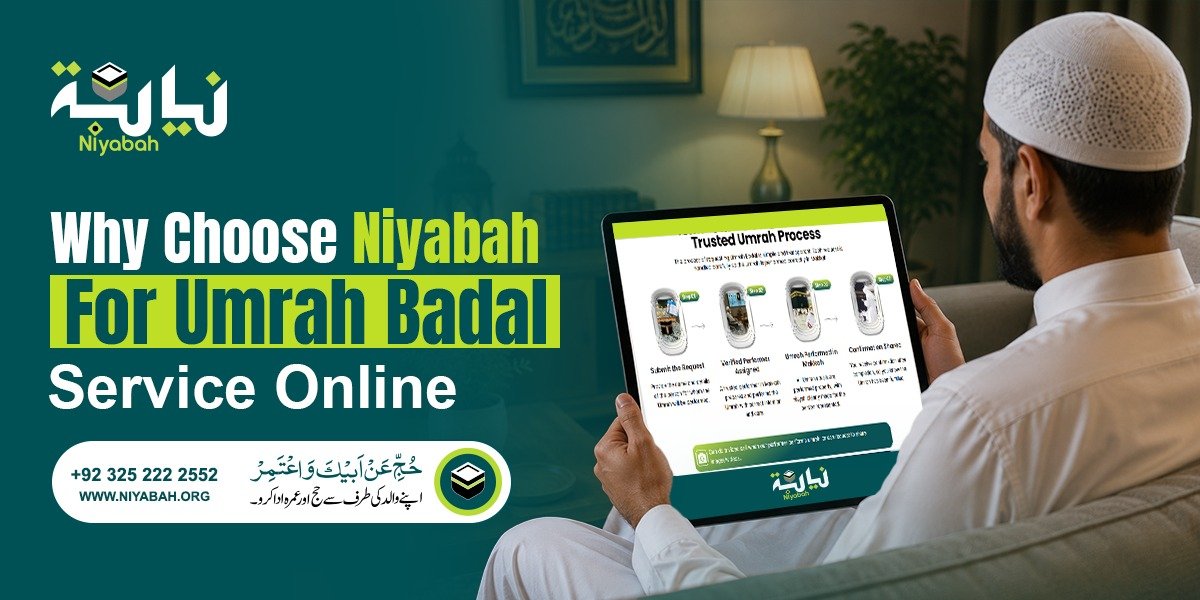
Niyabah describes a four-step process: the requester submits the person’s details, a performer is assigned, Umrah is completed in Makkah with the named intention, and confirmation is shared with the family. The website also describes video calls, images, or videos as possible confirmation options upon request. Visit the Niyabah website to review the process before making an enquiry.
Questions to Ask Before Arranging Umrah Badal
Before booking, ask direct questions rather than assuming that every provider follows the same procedure. A responsible provider should welcome reasonable questions and give understandable answers. If the explanation remains unclear or the representative pressures you to pay immediately, pause the process.
Ask the following questions before submitting your request:
- Who will perform the Umrah?
- Is the performer currently based in or travelling to Makkah?
- Has the performer completed their own required pilgrimage?
- How will the intention be made for the named person?
- Will one Umrah be dedicated to one person?
- Which rituals will be completed?
- When is the Umrah expected to take place?
- What does the service fee include?
- Are there any additional costs?
- What details are required from the family?
- How will completion be confirmed?
- Will personal information remain private?
- What happens if the Umrah is delayed?
- Can the family contact the service after booking?
Review these questions with the provider and proceed only when the answers are satisfactory.
How the Umrah Badal Process Works
The rituals of Umrah Badal follow the essential sequence of Umrah, with the defining difference being that the intention is made for the represented person. The performer enters Ihram with that intention, completes Tawaf around the Kaaba, performs Sa’i between Safa and Marwah, and completes the Umrah by shaving or trimming the hair.
According to Niyabah, each request is connected to the name and details provided by the family. A performer in Makkah undertakes the Umrah, and confirmation is privately shared after completion. Learn how to request Umrah Badal through Niyabah when you are ready to discuss a loved one’s case.
Why Intention Matters
The intention distinguishes Umrah performed for oneself from Umrah performed on behalf of another person. The performer must know who is being represented and undertake the pilgrimage with that person in mind. A vague intention for several unnamed people should not be treated as equivalent to a clearly assigned Umrah for one individual.
The family arranging the service should also understand its own intention. Is the request being made for a deceased parent, an elderly relative, or someone with permanent incapacity? Clarity helps prevent confusion and ensures that the service provider receives accurate information. Confirm the person’s full name and relevant details before submitting the request.
Common Mistakes to Avoid
One common mistake is assuming that every person who cannot travel immediately qualifies for Umrah Badal. Permanent incapacity and temporary difficulty are not necessarily the same. Another mistake is choosing a provider solely because it offers the lowest price, without asking who will perform the Umrah or how completion will be confirmed.
Families should also avoid providers that promise guaranteed acceptance, guaranteed forgiveness, or a specific amount of divine reward. Acceptance belongs to Allah and cannot be sold as part of a commercial package. Choose a service that focuses on correct performance, sincere intention, responsible communication, and respect for the sacred nature of Umrah.
Making the Decision as a Family
Decisions involving deceased parents can become emotionally sensitive, particularly when siblings have different opinions. One person may prefer Sadaqah because it helps people immediately, while another may want to arrange Umrah Badal because the parent had hoped to visit Makkah. Both concerns may come from love and should be discussed respectfully.
Begin by clarifying the available budget and the family’s main intention. Then seek qualified religious guidance where necessary. There may be no need to create conflict by presenting one action as meaningful and the other as useless. Agree on a responsible plan, document who will handle the arrangement, and choose a transparent provider or charitable cause.
Final Decision: Sadaqah or Umrah Badal?
The right decision depends on what you intend to achieve. Choose Sadaqah when your priority is helping a person, family, or community through voluntary charity. Consider Umrah Badal when your specific intention is to arrange Umrah on behalf of a deceased or permanently incapable Muslim who meets the relevant conditions.
The discussion of Sadaqah vs Umrah Badal is therefore not about declaring one act universally superior. It is about understanding that each has a different purpose. Some families may choose Sadaqah, some may arrange Umrah Badal, and others may do both when possible. Seek scholarly advice for personal religious circumstances and make your decision without pressure.
When the intention is to have Umrah performed for a loved one, choose a process that is clear, respectful, and properly explained. You can arrange Umrah Badal through Niyabah and submit the details of the person you wish to represent. Review the process, ask your questions, and request the service only when you are fully comfortable with the arrangement.
Frequently Asked Questions
Is Sadaqah the Same as Umrah Badal?
No. Sadaqah is a voluntary charity that benefits people or supports a worthwhile cause. Umrah Badal is an actual Umrah performed on behalf of one eligible person. The intention, process, beneficiary, and practical outcome are different.
Can Sadaqah Be Given for a Deceased Person?
A well-known narration reports that the Prophet Muhammad ﷺ confirmed that a person could give charity on behalf of a deceased mother. Families commonly use this as guidance when donating in memory of deceased parents or relatives.
Can Umrah Badal Be Performed for a Living Person?
It may be considered for a living Muslim who is permanently unable to undertake the journey because of advanced age or lasting physical incapacity. Temporary illness or temporary travel difficulty should be discussed separately with a qualified scholar.
Is Umrah Badal Only for Parents?
No. It may be arranged for another eligible Muslim, such as a spouse, sibling, relative, or loved one. The relationship is not the main issue; eligibility, proper intention, and correct performance are more important.
Can One Umrah Badal Be Performed for Several People?
A proxy Umrah is generally assigned to one specifically represented individual. Families wishing to arrange Umrah for more than one person should discuss separate arrangements with a qualified scholar and the service provider.
Can I Give Sadaqah and Arrange Umrah Badal for the Same Person?
Yes, the two actions may be undertaken separately because they have different purposes. The Sadaqah can provide charitable benefit, while the Umrah Badal is performed for the named person.
Which Option Is More Affordable?
Sadaqah can be given in almost any manageable amount. Umrah Badal involves arranging the performance of Umrah and therefore normally has a defined service cost. Request a transparent price before confirming an arrangement.
Does Niyabah Perform a Real Umrah?
Niyabah describes its offering as a real Umrah service rather than a symbolic donation. Its website states that a performer completes the Umrah rituals in Makkah with the intention made for the person named by the requester.
How Will I Know the Umrah Was Completed?
Niyabah states that confirmation is shared privately after completion. The website also mentions that families may request images, videos, or a video call depending on the arrangement. Confirm the available proof options before booking.
What Information Is Needed to Arrange Umrah Badal?
The service will usually require the name and basic details of the person for whom Umrah is being arranged. Ask the provider exactly what information is required and how it will be protected before submitting personal details.
Should I Consult a Scholar Before Deciding?
Yes, particularly when the person is living, temporarily ill, financially unable to travel, or expected to recover. A qualified scholar can assess the individual circumstances and explain the relevant religious conditions.
How Can I Arrange Umrah Badal Online?
Review the service process, confirm eligibility, ask about the performer and completion evidence, and submit the required details through a trusted provider. To begin, visit the Niyabah Umrah Badal service page and request complete information about the arrangement.